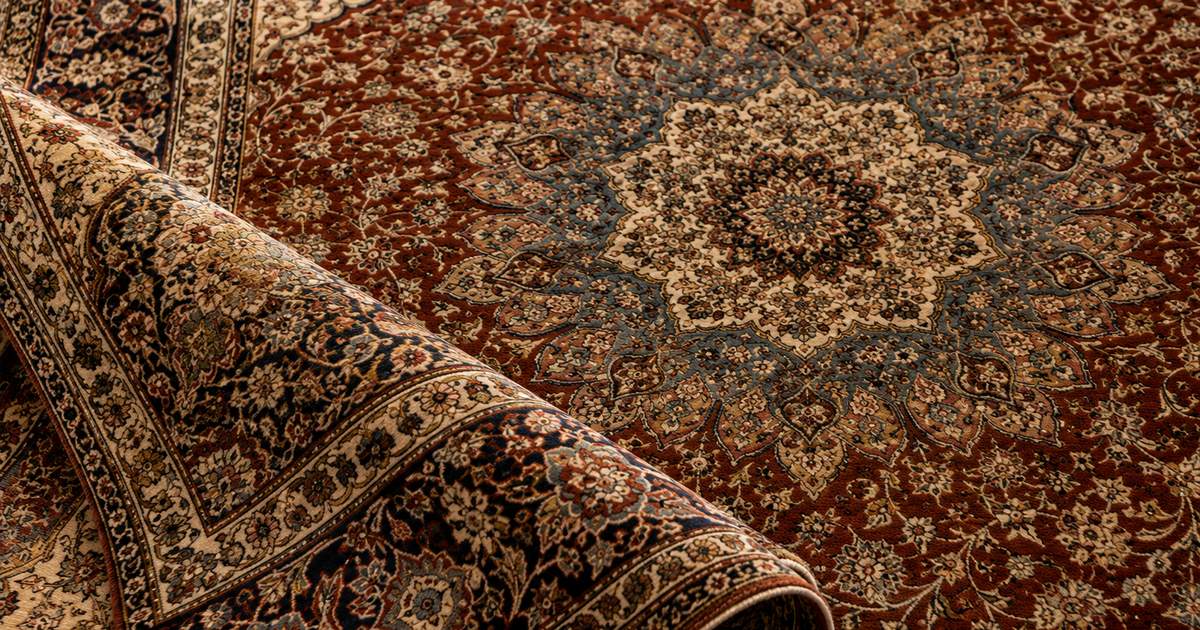
More than almost any other Persian rug, a Tabriz cannot be judged by its name alone. The city has produced rugs at every conceivable quality level for centuries, so two carpets both correctly called "Tabriz" can be worlds apart in fineness, materials and value. Understanding a Tabriz means learning to read those differences — and the vocabulary that dealers use to describe them.
A City of Weavers
Tabriz sits in the East Azerbaijan province of north-west Iran and has been a major commercial and artistic centre for a very long time. Its position on historic trade routes made it a hub for the rug trade, and its workshops have supplied both the domestic and export markets at scale. That commercial breadth is the root of the Tabriz paradox: the same city name covers everything from hard-working decorative rugs to the finest workshop carpets Persia has made.
For anyone assessing a Tabriz, the practical lesson is simple — look past the label and read the rug itself. That starts with a specific measure of quality found nowhere else quite so formally: the raj.
Understanding Raj
Because Tabriz quality varies so widely, the trade uses the raj to grade fineness. Raj counts the number of knots across a span of roughly seven centimetres — the higher the raj, the finer and more tightly knotted the rug, the sharper its detail, and, generally, the higher its value. You'll hear pieces described as 30 raj, 40 raj, 50, 60, 70 raj and higher, with the very finest workshop carpets reaching the top of that scale.
A high raj is not the whole story — age, design, materials and condition all matter too — but it is one of the first things a specialist checks, because it so directly reflects the labour and skill in the piece. A coarse decorative Tabriz and a fine high-raj example can be worth dramatically different sums despite sharing the same origin. When you photograph a Tabriz for valuation, a sharp close-up of the reverse is the single most useful image, because it lets a specialist read the raj at a glance.
Tabriz Designs: Medallions, Mahi and More
Tabriz design is famously varied. You'll find central-medallion layouts, all-over repeating patterns, and elaborate pictorial and hunting scenes. But the design most associated with the city is the Mahi — the Herati or "fish" pattern. Mahi means fish in Persian, and the motif is a small rosette flanked by curving, fish-shaped leaves, repeated rhythmically across the field. It is a hallmark of Tabriz weaving, though it also appears in other regions such as Mashad.
Palettes run the full range, from deep classical reds and indigo blues to the soft ivories and creams favoured in the finest antique pieces. If you'd like to place these motifs within the broader Persian design vocabulary, our guide on how to identify a Persian rug sets out the Herati, boteh, Shah Abbas and medallion families side by side.
How Tabriz Rugs Are Constructed
Construction is one of the more distinctive things about a Tabriz. Many are knotted on a cotton foundation, and — unusually among Persian cities — Tabriz weavers frequently use the symmetric Turkish knot, although some workshops use the asymmetric Persian knot. This dual practice is itself a useful identification clue, since most Persian city rugs favour the Persian knot almost exclusively.
The pile is typically fine wool, often lifted with silk highlights, and the most luxurious pieces are woven entirely in silk. As a rule, the more silk and the higher the raj, the higher the value — but only in combination with good age, design and condition.
Sizes, Pictorials and the Modern Tabriz
Tabriz's range shows in its formats as well as its fineness. The city has long been known for weaving large and oversized carpets — room-size and palace-size pieces that many smaller weaving centres never attempted — a capacity that goes back to the Safavid royal workshops and expanded again during the export era. If you own an unusually large, finely drawn Persian carpet, Tabriz is one of the first origins a specialist will consider.
The city is also the home of the Persian pictorial rug. Hunting scenes, garden compositions, architectural views and portraits of figures from Persian literature appear more often in Tabriz than in almost any other weaving tradition, and a well-executed pictorial piece can be highly collectible. Just as importantly, Tabriz never stopped weaving well: unlike some regions whose finest work is firmly in the past, the city's workshops still produce high-quality rugs today. That means both antique and accomplished modern Tabriz carpets reach the market — so dating the piece correctly is a real part of valuing it, and a good reason to have it assessed rather than guessed at.
Own a Tabriz and want to know its value?
Send us photos of the front and a close-up of the reverse. We'll read the raj, materials, design and age, and give you a fair, no-obligation valuation.
Get a Free Tabriz ValuationHaji Jalili and the Antique Tabriz
Among antique Tabriz rugs, one name stands out: Haji Jalili. A renowned late-nineteenth-century Tabriz master weaver, Haji Jalili ran a workshop celebrated for delicate drawing and restrained palettes — the soft ivories, creams and gentle neutrals that distinguish his pieces from the bolder classical Tabriz look. Rugs attributed to Haji Jalili are actively sought by collectors and can command strong prices at auction and in the gallery trade.
As with any prestigious attribution, a claimed Haji Jalili must be treated carefully. The name adds real value, which means it is sometimes applied optimistically. A genuine attribution rests on the character of the weave, the drawing and the palette taken together — not on a hopeful description. Part of a proper valuation is confirming whether the rug's own qualities support the attribution being made.
What Drives a Tabriz's Value
When we assess a Tabriz, these are the factors that matter most:
- Raj (fineness): The higher the raj, the finer the weave and the sharper the detail — a primary value driver.
- Materials: Fine wool, silk highlights, or full-silk construction each raise value in turn.
- Age: Antique Tabriz rugs, especially fine nineteenth-century pieces, attract the strongest collector demand.
- Workshop: A confirmed master attribution such as Haji Jalili can raise value substantially.
- Design: Well-drawn Mahi, medallion or pictorial designs with balanced colour are more desirable.
- Condition: Even pile and sound sides and ends help, though rarity and age can offset honest wear.
For a fuller picture of how these factors combine across all rug types, see our overview of what affects rug value.
Tabriz Among the Great Persian Weaves
Tabriz completes a trio of great north-west and central Persian weaving traditions worth knowing together. Where the Heriz is bold and geometric and the Isfahan is fine and curvilinear, the Tabriz is the great all-rounder — capable of both, and spanning the widest quality range of any. That versatility is its strength and its complication: it means a Tabriz always rewards a close, expert look before you decide what it's worth.